Tile installation looks simple when you only see the finished surface. Smooth floors. Clean lines. Perfectly spaced grout. What most homeowners do not see is the layered process underneath that makes tile durable in Denver homes. Professional tile installation is not just about placing tile. It is about building a system that survives climate, movement, moisture, and time.
The process begins with evaluation. Every surface tells a story. Floors reveal dips, soft spots, or movement. Walls show uneven framing or moisture history. In Denver, soil conditions and seasonal shifts cause subtle changes in structure. A professional installer reads those signals before starting work. Skipping evaluation is how problems show up later.
Subfloor preparation is the foundation of the entire installation. Tile demands stability. Wood subfloors must be secured. Weak areas must be reinforced. Concrete must be clean and properly cured. Any movement beneath tile eventually transfers upward. Professional installers correct these issues before tile ever comes out of the box.
Leveling is another critical step. Tile does not bend. Uneven surfaces create stress points that lead to cracking. Professional installation includes leveling compounds or corrective techniques to create a flat plane. This step takes time and precision but determines how the tile performs long term.
Moisture management follows. In bathrooms, showers, and kitchens, water exposure is constant. Tile itself resists moisture but grout and substrate do not unless protected. Professional tile installation includes waterproof membranes, proper sealing, and correct overlap techniques. In Denver where indoor humidity fluctuates, this protection prevents mold and structural damage.
Material selection continues to matter during installation. Thinset choice is not one size fits all. Different tiles require different bonding agents. Climate and surface conditions influence which products perform best. Professional installers select materials based on real world performance rather than convenience.
Layout planning shapes the final appearance. Tile lines should feel intentional. Center points are established. Cuts are planned in advance. This prevents narrow slivers of tile along walls or awkward visual breaks. A good layout feels balanced even if you cannot explain why.
Dry fitting is often used to confirm layout. This step allows installers to adjust spacing and alignment before permanent placement. It saves time and prevents mistakes that would otherwise require tile removal.
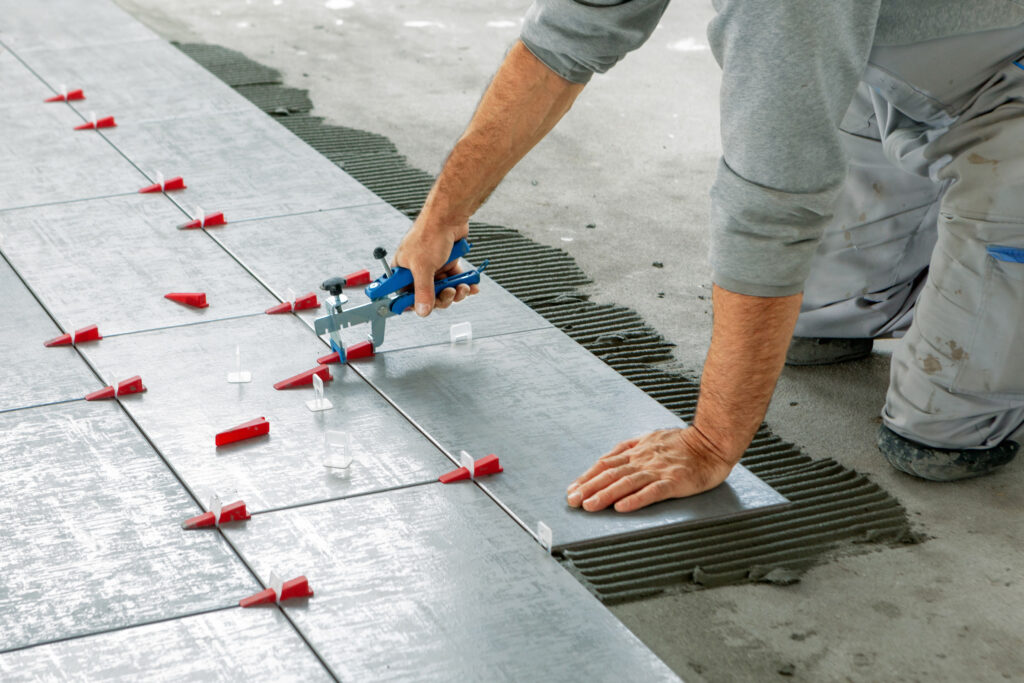
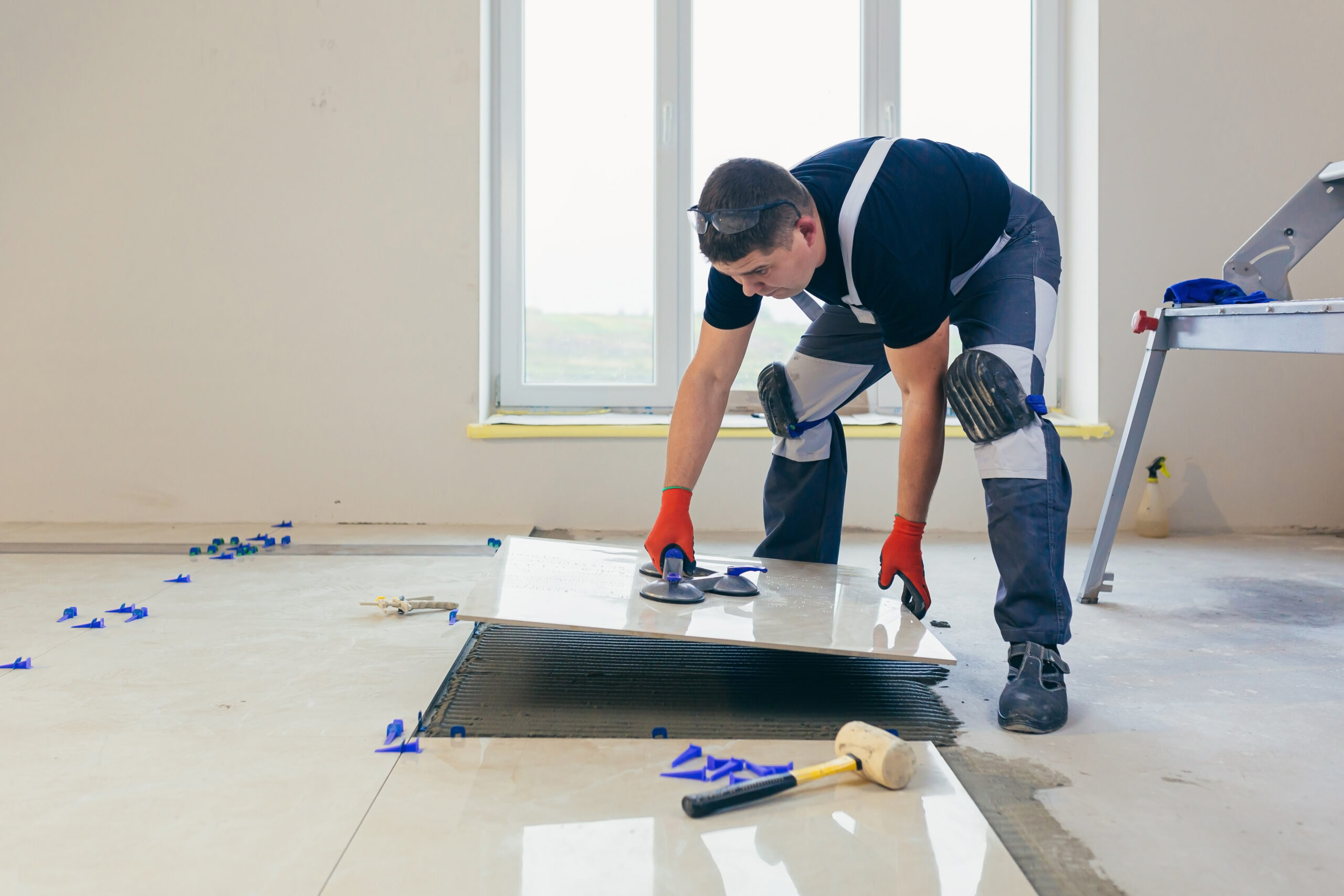
Setting tile is where patience matters most. Thinset must be mixed correctly. Tiles are pressed evenly to ensure full coverage. Spacing is consistent. Levels are checked constantly. Rushing this step leads to hollow spots and uneven edges. Professional installers move methodically to maintain quality.
Cuts define craftsmanship. Clean edges around outlets. Smooth corners. Precise transitions. In Denver homes where design standards are high, sloppy cuts stand out immediately. Professional tile installation includes the tools and experience required to produce clean results.
Expansion space is built into the installation. Tile expands and contracts with temperature changes. Denver climate makes this unavoidable. Professional installers include movement joints and perimeter gaps that allow tile to move without cracking. These gaps are often hidden by trim or grout but they are essential.
Grouting comes after proper curing time. Grout locks tiles together and fills joints, but timing matters. Too early and the bond weakens. Too late and grout adhesion suffers. Professional installers understand these windows and work within them.
Grout application is careful and controlled. Lines are filled evenly. Excess is removed properly. Grout joints are shaped consistently. This step affects both appearance and durability. Poor grout work draws attention and fails prematurely.
Sealing may be required depending on tile and grout type. Sealer protects against stains and moisture infiltration. In kitchens and bathrooms, sealing extends the life of the installation and simplifies maintenance.
Curing time is respected. Tile installations are not meant for immediate heavy use. Professional installers provide clear guidance on when areas can be walked on and when they can handle furniture or appliances. Ignoring curing time shortens lifespan.
Transitions between surfaces receive special attention. Tile meeting wood or carpet should feel smooth underfoot. Height differences are corrected. Transition strips are installed cleanly. These details affect daily comfort more than many homeowners realize.
Heated flooring systems require additional coordination. Tile thickness and layout must accommodate heating elements. Professional installers ensure even heat distribution and protect wiring during installation. In Denver winters, this feature adds comfort and value.
Outdoor tile installations require even more precision. Proper slope ensures drainage. Freeze resistant materials are mandatory. Expansion space is critical. Denver winters punish shortcuts quickly. Professional outdoor tile installation plans for these conditions from the start.
Clean up and final inspection complete the process. Tiles are checked for alignment. Grout lines are reviewed. Edges are inspected. A professional installer does not rush this final step. Quality control protects reputation and performance.
Professional tile installation in Denver is a blend of planning, skill, and patience. Each layer supports the next. When one step is skipped, the entire system weakens.
When everything is done correctly, tile becomes part of the home rather than an added surface. It feels solid. It looks intentional. It performs quietly year after year.
That is what professional tile installation really includes. Not just tile on a floor or wall, but a carefully built foundation designed to last in Denver conditions.